

The buzz surrounding Latin America – particularly Venezuela – had me making connections to the infamous Doña Bárbara, the star protagonist of the novel by the same name. Published in 1929 by Rómulo Gallegos (who would later become President of the country), the enigmatic story is one of many Latin American novels to explore the relationship between civilization and barbarity.
Doña Bárbara is a feminine take on the typical caudillo – someone who uses sheer violence and charisma to control territories and peoples by force. Set roughly a hundred years ago at a time where caudillismo was still around (though in decline), the Venezuelan plains are ruled by the iron-fisted caudilla who trumps every effort to thwart her rule. Her power resides in her own cunningness, knowledge of the occult arts, and her larger-than-life persona.
La “devoradora de hombres” demonstrates a specific kind of barbarity that still has not rid itself yet; namely, the misuse of law for selfish gain. Like a stubborn weed capable of flourishing in any time period, country or political leaning. The flatlands of the Venezuelan llano did not yet live under the influence of a modernity as we understand it today, but it most certainly had laws and people willing to construe them at will. Probably more cunning than just completely dissolving an entire National Assembly, the caudilla bribed her own law – <<la Ley de doña Bárbara>> – into existence.
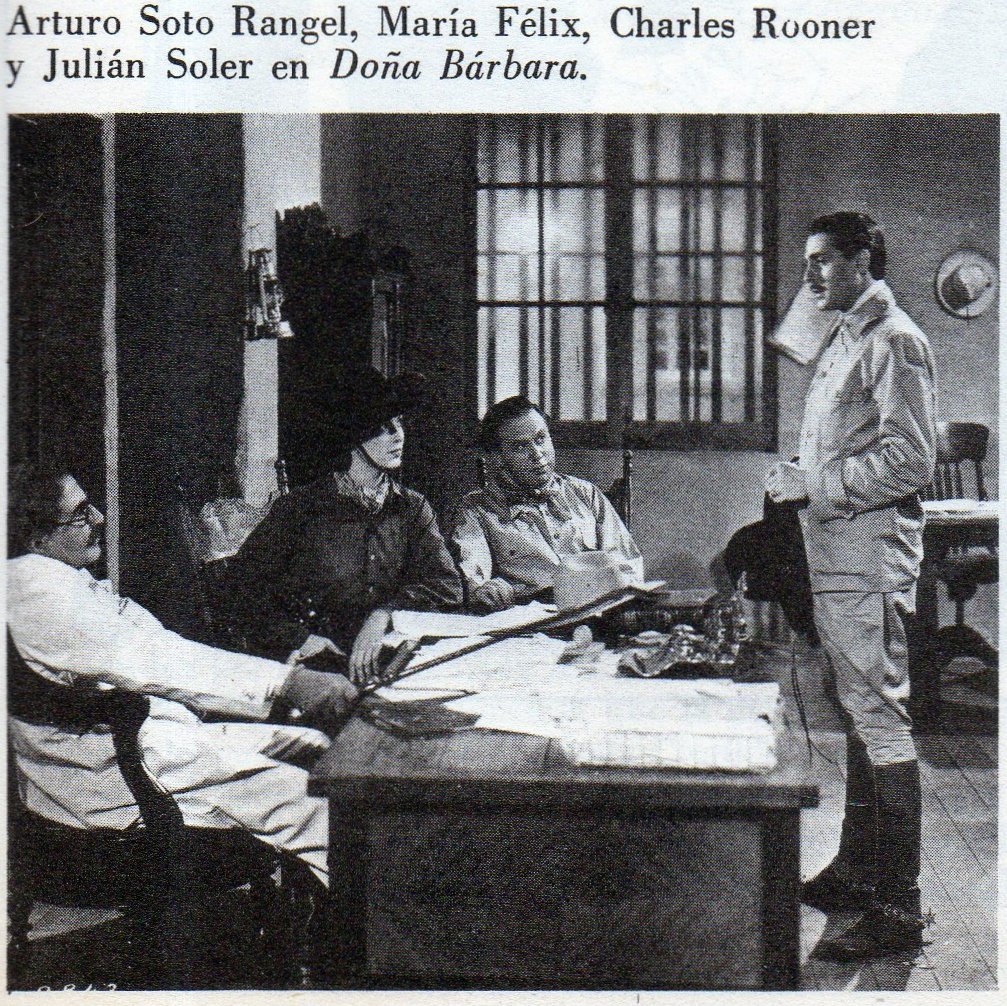
Essentially, in cases where landowners must permit others to enter into their property to retrieve wandering livestock, the caudilla’s law intentionally omits any language of criminal repercussions for those who refuse to uphold it. This move is not unlike rulers who refuse to heed to the rule of law, who exercise authority and influence to get what they want, often to the dismay of others.
Her indomitable will imposed on others is one very true definition of power. And in the case of the caudilla, power was a thing that consumed and destroyed anyone who desired her.
–Cada uno de los hombres aborrecibles para ti; pero, representándotelos uno a uno, yo te hago amarlos a todos, a pesar tuyo.
Ella concluyó, rugiente:
–Pero yo los destruiré a todos en ti.
She does not hide from her infamous reputation and puts up no façades, unlike others who feel that they must, or insecure with doing so. A lot of things have changed in the country since the conception of Gallegos’s llano worldscape, but some things have stayed woefully the same.
Doña Bárbara herself is a cautionary tale for those still looking for her in the screams of political prisoners in torture dungeons or the regality of the Presidential chair. In the end, even she had reached her end.
 emmanuel navarro
Leave a comment